|
CardLogix
is a high-quality platform provider, ensuring that smart card
integrators have the most leading software technology
available for solution development.
A wide variety of middleware and development tools are
available. For finished applications, see CardLogix Smart Partners
for a solutions that uniquely fits your needs.
Your
development solutions start with
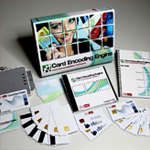
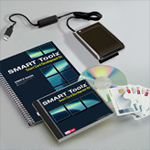
Smart Toolz™, featuring a
powerful DLL for entry-level creation of a memory card
solution. For
multi-function applications,
M.O.S.T. Toolz
™ can be
added-on to SmartToolz.
For specialized applications, CardLogix provides the
Movie Gold ™ API for movie theaters, Trakplex™ for
hospitality and gaming and
Printplex™, provided with a
hardware coupler, for card issuance.
As
part of our range of tools, CardLogix also offers third-party
options from our marketing partners.
All CardLogix development software is compatible with
the Microsoft Windows environments including Windows 2000.
For some
helpful examples, check-out our downloads page.
|
Microprocessor
Card Operating Systems
It's all about
Choices
At
CardLogix we let you choose what's best for your business. We
offer the widest array of choices in the market today. Each
Card Operating System offers specific benefits and drawbacks.
There
are predominately two styles of Card Operating Systems. The
Classic
approach treats each card as a secure computing and
storage device. Files and permissions to these files are all
set by the issuer in advance. The only access to the cards is
through the operating system. There is no back doors, no
reconfiguration of file structures on the card. Data is read
or written to the card through permissions set only by the
issuer. The operating system performs a set of
“applications” such as authentication and encryption as
requested through commands sent to the card. This type of card
is the most cost effective in many business settings because
you only pay for the size and functions that you specify.
The
M.O.S.T.
Card Family
from CardLogix
and the FIPS2000
system are products in this Style.
The
second methodology is the Disk Drive approach to card
operating systems. The OS has an active memory manager, this
allows you to load onto the card specific “applications”
and files. The Card Operating System allows for active file
allocation and management. It is designed for card programs
that have a long expected user life (4 years +) Multos,
the CardLogix
M.O.S.T.TM OS, and the JAVA
Card OS
are examples of this approach.
The
advantage of these cards is replacement costs for cards can go
down but the first issuance individual card cost is more
expensive. These card architectures
need a larger memory for future unplanned upgrades and
a larger program memory to upload applets. This translates to
larger semiconductors at a higher cost. This approach also
comes with a licensing burden that is ultimately paid by the
card issuer. Also, the security infrastructure costs are much
higher to manage due to the multiple points of entry to the
card system functions.
| |